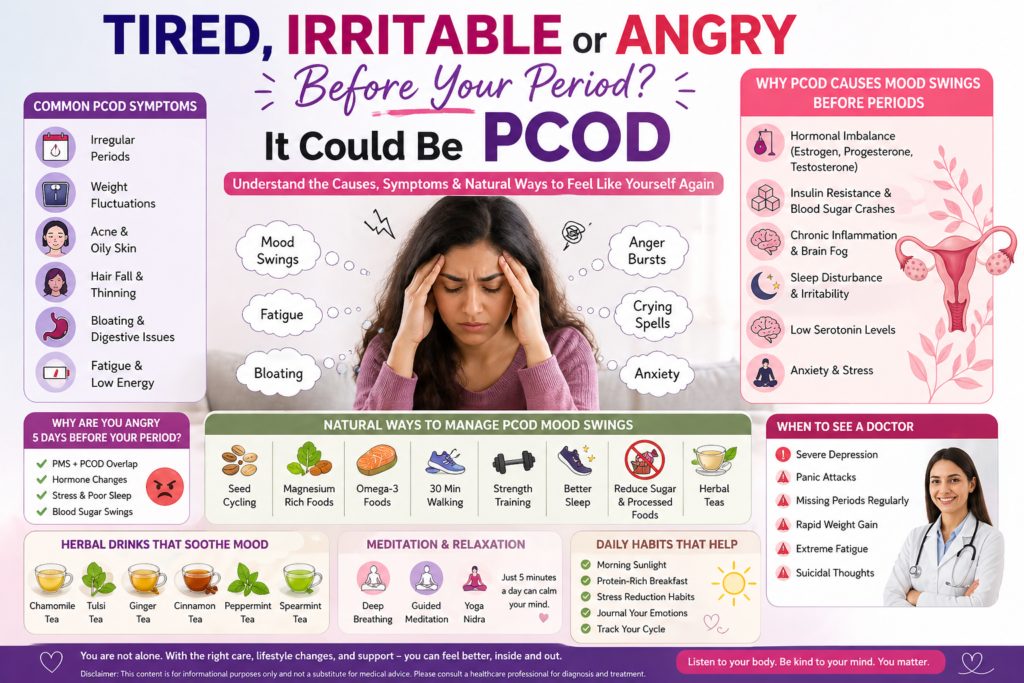

Have you ever found yourself crying over a sad commercial, then a few minutes later feeling angry because someone breathed too loudly? Does this happen right before your period?
If you are nodding, you are not broken. You are not “too dramatic.” And you are certainly not alone.
For women living with PCOD, the days leading up to a period can feel like an emotional whirlwind. One moment you feel fine. Next, you experience intense anger, crippling fatigue, or anxiety that seems to appear out of nowhere. This is real. There is a medical reason for it.
In this guide, we will look at the connection between PCOD and mood swings before periods. You will learn what is happening in your body, why you might feel tired after meals, and, most importantly, practical, natural ways to feel like yourself again.
What is PCOD?
Before we dive into emotions, let’s talk basics. What is PCOD?
PCOD stands for Polycystic Ovarian Disease. It is a common hormonal condition where a woman’s ovaries produce immature or partially mature eggs. Over time, these eggs turn into tiny cysts. Here is the simple version: your ovaries work harder than they should, but they don’t always release an egg each month.
Difference between PCOD and PCOS
Many people use these terms interchangeably, but there is a small difference. PCOD is generally considered milder. Most women with PCOD can still ovulate occasionally and may not have the same level of insulin resistance as PCOS. PCOS (polycystic ovary syndrome) is a more severe metabolic condition. However, for mood swings, both conditions act very similarly.
Why hormones matter in PCOD
Your body has a delicate hormone orchestra. In PCOD, that orchestra is out of tune. You might have higher levels of androgens (male hormones), irregular estrogen, and low progesterone. These imbalances don’t just affect your skin or weight. They directly talk to your brain. And when your brain gets mixed hormonal signals? Your mood swings on a rollercoaster.
Common Symptoms of PCOD
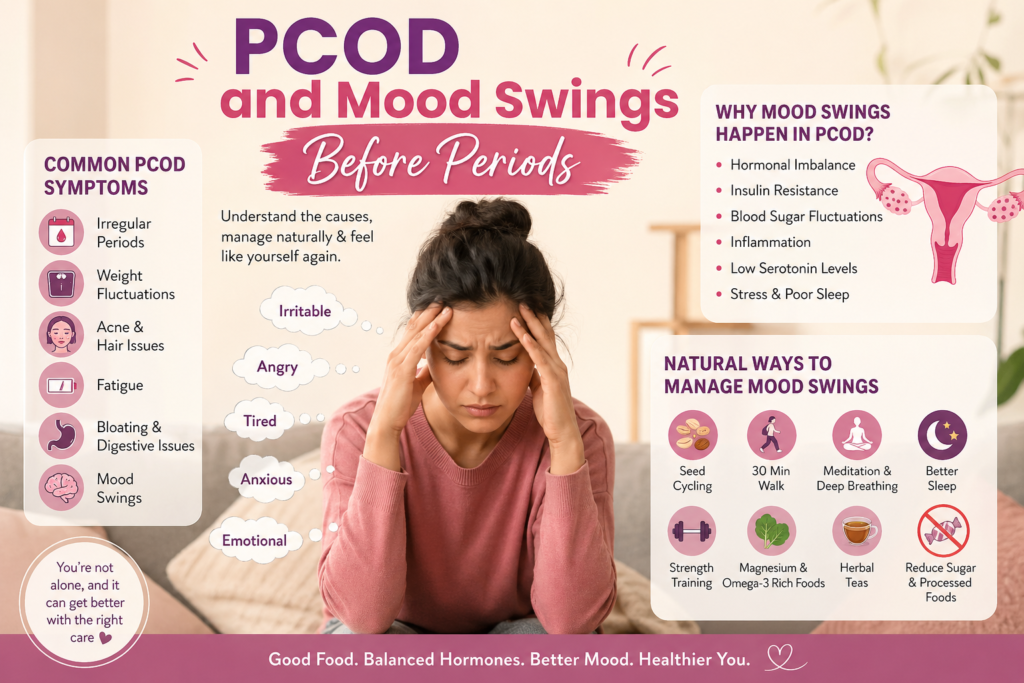
Knowing the full picture helps you connect the dots. Beyond irregular cycles, common symptoms of PCOD include:
- Irregular periods– (sometimes 35+ days apart, or missing periods entirely)
- Weight gain—especially around the belly
- Acne—on the jawline, chest, or upper back
- Thinning hair– on the scalp or extra hair on the face/chin
- Fatigue—that doesn’t go away after sleep
- Mood changes– (which we will focus on heavily)
- Brain fog and trouble concentrating
If you recognize several of these, you are likely dealing with PCOD. And yes, emotional symptoms are just as real as the physical ones.
What is the cause for PCOD and Mood Swings Before Periods?
Let’s get to the heart of the matter. Can PCOD cause mood swings before periods? The short answer is yes — absolutely. In fact, PCOD and mood swings before periods are deeply connected through several biological pathways.
Here is why your emotions feel so raw right before your period:
Hormonal Imbalance in PCOD
Your menstrual cycle has two main phases. After ovulation, your body should produce progesterone, a calming hormone that helps you sleep and reduces anxiety. But many women with PCOD don’t ovulate regularly. That means they don’t produce enough progesterone. Instead, estrogen dominates. High estrogen relative to low progesterone is a recipe for irritability, tearfulness, and mood swings.
Insulin Resistance and Mood Changes
Insulin is a hormone that moves sugar from your blood into your cells. In PCOD, your cells ignore insulin (that is insulin resistance). Your body panics and pumps out even more insulin. High insulin levels trigger your ovaries to make more testosterone. And high testosterone? It is linked to aggression, anger, and low patience. So yes, insulin resistance and mood swings are deeply connected.
Chronic Inflammation and Brain Fog
PCOD is a state of low-grade, chronic inflammation. When your body is inflamed, it produces cytokines that can cross into your brain. These inflammatory markers make you feel tired, foggy, and emotionally sensitive. Before your period, inflammation naturally rises. Combine that with PCOD’s baseline inflammation, and your mood takes a direct hit.
Sleep Disturbance and Irritability
Poor sleep makes anyone cranky. But in PCOD, hormonal imbalances disrupt your sleep architecture. You may wake up often, struggle to fall asleep, or feel unrefreshed. Over a few nights of this, your amygdala (the brain’s fear and anger center) becomes hyperactive. Suddenly, small annoyances feel like huge betrayals.
Anxiety and Stress in PCOD
Is anxiety common in PCOD? Absolutely. Studies suggest women with PCOD are three times more likely to experience moderate to severe anxiety. The reason is twofold. First, hormones directly affect GABA, a neurotransmitter that calms your brain. Second, living with unpredictable periods, weight struggles, or fertility worries creates real psychological stress. That stress raises cortisol. High cortisol worsens insulin resistance. And the cycle continues.
Low Serotonin Levels
Serotonin is your “feel-good” brain chemical. Estrogen helps your brain produce serotonin and makes it more available. Right before your period, estrogen drops sharply. For a woman without PCOD, that drop is manageable. For a woman with PCOD, whose hormone levels are already erratic, that serotonin plunge can feel like falling off a cliff. Low serotonin = low mood, cravings, anger, and sadness.
Blood Sugar Crashes
Have you ever felt shaky, angry, and hungry all at once? That is a blood sugar crash. Because insulin resistance in PCOD makes it hard for your body to regulate glucose, you are prone to highs and lows. A few hours after a carb-heavy meal, your blood sugar can crash. Your brain interprets low blood sugar as a life-threatening emergency. It releases adrenaline and cortisol, making you feel anxious, jittery, or explosively angry.
Do PCOD Really Affect Mood Swings?
Yes. And it is time we talk about it more openly.
PCOD and mental health are often discussed separately, but they are the same picture. Your ovaries, your pancreas (insulin), and your brain are constantly talking to each other. When one is stressed, all are stressed.
PCOD emotional symptoms are often dismissed as “just PMS” or “being dramatic.” But research shows that women with PCOD report significantly higher rates of depression, anxiety, and bipolar-like mood shifts. If you have felt this, please know: your feelings are valid biological responses, not character flaws.
The most common emotional signs include:
- Feeling overwhelmed by small tasks
- Crying without a clear trigger
- Sudden anger that fades quickly
- Social withdrawal before your period
- Low self-esteem during the luteal phase (the week before your period)
Common Symptoms of PCOD Mood Swings Before Periods
When PCOD and mood swings symptoms appear, they often show up as a cluster. You might not have every single one, but if you have three or more, PCOD is likely playing a role.
| Emotional Symptom | Physical Companion |
|---|---|
| Irritability | Bloating |
| Anger bursts | Breast tenderness |
| Sudden crying | Headaches |
| Anxiety | Muscle aches |
| Low motivation | PCOD fatigue after meals |
| Feeling hopeless | Sleep disruption |
| Restlessness | Digestive changes |
Many women also notice they become more sensitive to sound, light, or touch in the five days before their period. This is your nervous system on high alert thanks to shifting hormones and inflammation..
What Happens to the Body When We Are More Angry?
Anger is not just “in your head.” It is a full-body event. When PCOD and mood swings before periods trigger anger, here is what happens physically:
- Cortisol surges: Your stress hormone spikes, which worsens insulin resistance and inflammation.
- Digestion slows: Blood moves away from your stomach. This explains why you might feel nauseous or gassy when angry.
- Heart rate increases: Your heart pounds. Your blood pressure rises briefly.
- Inflammation rises: Chronic anger keeps your body in a pro-inflammatory state, making PCOD symptoms worse.
- Sleep disruption: Anger before bed = high cortisol at night = poor sleep = more anger tomorrow. It is a cycle.
Breaking this cycle requires addressing the root hormonal and metabolic causes, not just “calming down.”
Why Do I Feel Sleepy After Meals in PCOD?
You finish lunch, and within 30 minutes, you are fighting to keep your eyes open. This is incredibly common. Why do I feel sleepy after meals in PCOD? Let’s explain.
Insulin Resistance
When your cells resist insulin, your body produces extra insulin to force glucose inside. That high insulin level promotes the uptake of tryptophan into your brain. Tryptophan converts to serotonin, and serotonin converts to melatonin (the sleep hormone). So a meal can literally trigger a sleepy brain chemical cascade.
High-Carb Meals
Bread, rice, pasta, sweets—these spike your blood sugar. Your body releases a huge amount of insulin. That insulin surge causes a rapid drop in blood sugar (reactive hypoglycemia). A blood sugar crash feels exactly like exhaustion, shakiness, and brain fog.
Blood Sugar Spike and Crash
The spike gives you a temporary energy boost (maybe 20 minutes). The crash hits hard. PCOD fatigue after meals is your body’s way of saying, “That meal was not balanced for my metabolism.”
Why Tired Throughout the Day
Because of chronic insulin resistance, your cells struggle to access energy. Even if you eat enough calories, the glucose stays in your bloodstream instead of entering your muscles and brain. So you feel tired constantly, not just after meals.
Natural Remedies for PCOD Mood Swings
Now for the good news. You are not stuck this way. How to control mood swings due to PCOS (and PCOD) starts with these natural, evidence-informed strategies.
Seed Cycling
This involves eating specific seeds during different phases of your cycle. Weeks 1-14 (day 1 of period to ovulation): 1 tbsp ground flax + 1 tbsp pumpkin seeds daily. Weeks 15-28 (after ovulation to next period): 1 tbsp ground sunflower + 1 tbsp sesame seeds daily. Seeds provide lignans and healthy fats that support hormone metabolism.
Magnesium-Rich Foods
Magnesium calms the nervous system, reduces water retention, and helps with sleep. Think pumpkin seeds, almonds, spinach, dark chocolate (70%+), and black beans. Many women with PCOD are deficient.
Omega-3 Foods
Omega-3s reduce inflammation. Lower inflammation means less brain fog and fewer mood swings. Eat wild salmon, sardines, walnuts, or flaxseeds. Or take a quality fish oil supplement.
30-Minute Walking
No, you do not need HIIT. Vigorous exercise can actually raise cortisol in PCOD. Gentle, consistent walking for 30 minutes daily improves insulin sensitivity without stressing your body. Walk outside in morning light for bonus mood benefits.
Strength Training
Two to three times a week of resistance bands, bodyweight exercises, or lifting weights builds muscle. More muscle = better blood sugar control = more stable moods.
Better Sleep Routine
Go to bed at the same time. No phone 60 minutes before sleep. Keep your room cool and dark. Sleep is when your hormones reset. Protect it fiercely.
Reduce Sugar and Processed Foods
This is not about restriction. It is about replacement. Swap sugary snacks for protein + fat combos (apple with peanut butter, Greek yogurt with berries). Stable blood sugar = stable moods.
Herbal Teas
We’ll cover these next, but briefly: certain teas lower cortisol, reduce inflammation, and support liver detox of used hormones.
Herbal Drinks That May Soothe Mood Swings
These are not cures, but they are lovely, safe supports.
- Chamomile tea: Reduces anxiety and acts as a mild sedative. Perfect before bed.
- Tulsi tea (Holy Basil): Lowers cortisol and supports adrenal glands. Drink during afternoon stress spikes.
- Ginger tea: Reduces inflammation and improves insulin sensitivity. Also helps with period cramps.
- Cinnamon tea: Helps stabilize blood sugar after meals. Steep a cinnamon stick in hot water for 10 minutes.
- Peppermint tea: Reduces bloating and calms an irritable stomach. Great for the angry, bloated days.
- Spearmint tea: Some research shows it lowers androgen levels. Drink two cups daily for 30 days to see changes.
Meditation for PCOD Mood Swings
You have heard “just meditate” before. But here is the truth: five minutes counts.
- Deep breathing: Inhale for 4 counts, hold for 4, exhale for 6. The longer exhale activates your parasympathetic nervous system (rest and digest). Do this when you feel anger rising.
- Guided meditation: Apps like Insight Timer or Calm have 5-minute sessions for irritability and PMS.
- Yoga Nidra: This is “yogic sleep.” A 20-minute practice lying down. It repairs sleep debt and lowers cortisol more effectively than a nap.
- 5-minute routine: Sit quietly. Focus on your breath. When your mind wanders to anger or worry, gently return to your breath. That is it.
How to Manage PCOD Mood Swings Daily
Consistency beats intensity. Try adding these small habits:
- Morning sunlight: 10 minutes outside within 30 minutes of waking. Sets your circadian rhythm for better sleep.
- Protein breakfast: Eggs, Greek yogurt, or a protein shake. No toast or cereal alone. Protein stabilizes blood sugar from the first meal.
- Stress reduction habits: Five minutes of stretching, listening to a song you love, or calling a friend. Micro-moments of peace add up.
- Journaling: Write down what you feel without judgment. “I am angry and that is okay. Tomorrow I will feel different.”
- Cycle tracking: Use an app or paper calendar. Write down mood, energy, and cravings. After three months, you will see your pattern. That foresight reduces anxiety (“Oh, tomorrow is day 26. My anger will pass.”)
- Limit caffeine before periods: Caffeine raises cortisol and can worsen anxiety. Switch to green tea or decaf in the luteal phase.
When to See a Doctor
Natural remedies are powerful, but some situations need professional help. Please see a doctor, therapist, or psychiatrist if you experience:
- Severe depression that lasts more than two weeks
- Panic attacks (racing heart, difficulty breathing, fear of dying)
- Missing periods for three or more cycles in a row
- Extreme fatigue that prevents you from working or caring for yourself
- Suicidal thoughts or thoughts of self-harm (please call a crisis hotline immediately)
You deserve support. Hormonal mood swings are treatable with medications like SSRIs, birth control pills (for some), or metformin. There is no shame in needing medical help.



Great content! Keep up the good work!
THANK YOU FOR YOUR SUPPORT